

Mould & Condensation Specialists
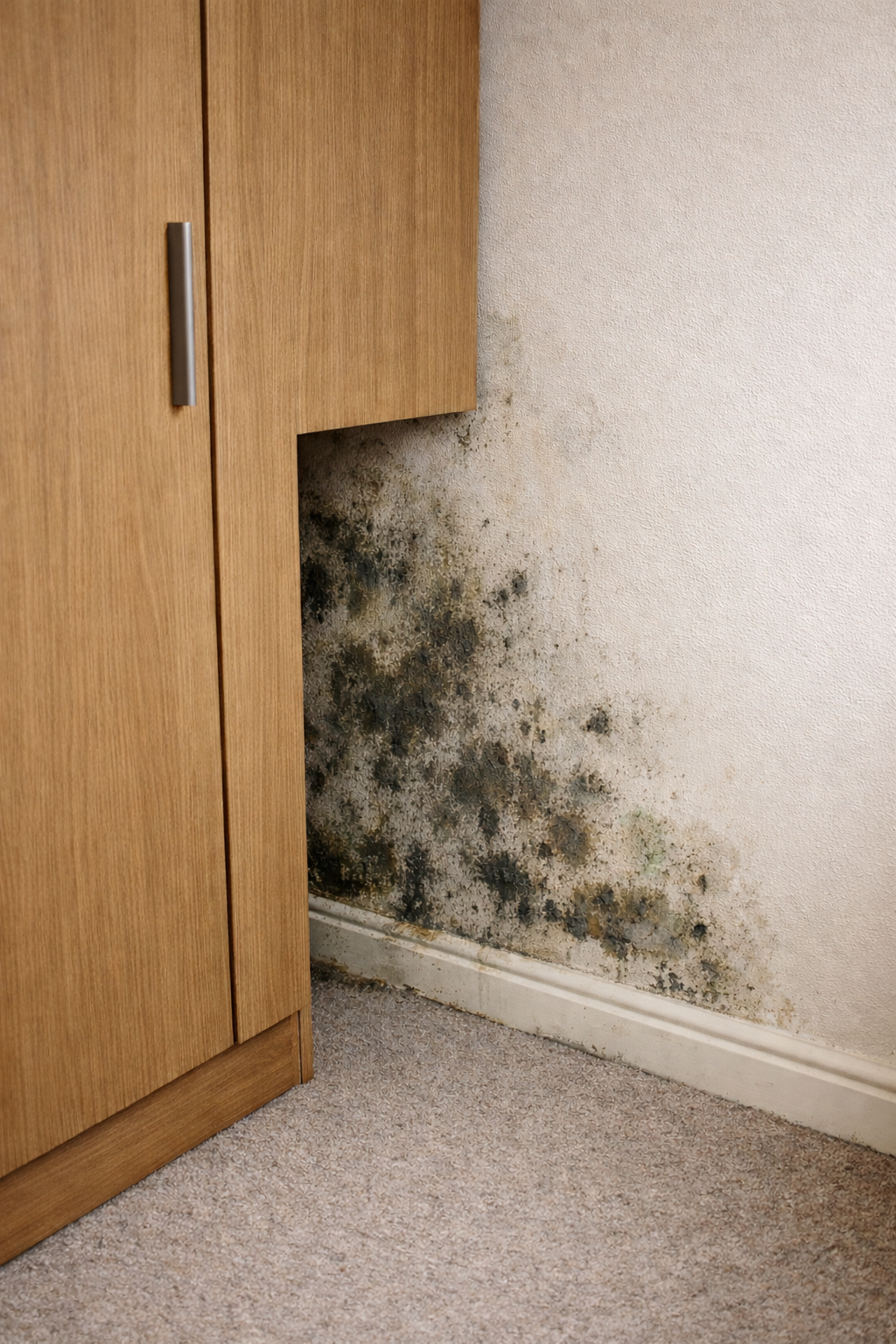
If mould keeps returning, the wall usually isn’t leaking.
Most mould problems come from moisture forming inside the air when it settles on colder parts of the building. Cleaning removes the marks but not the cause, which is why it keeps coming back.
We inspect how moisture behaves inside the property and explain how to stop it from forming.
Moisture & Ventilation Surveys | North West England
When Condensation is the real problem
Upper walls
Marks appear higher up rather than at floor level.
Behind furniture
Often found behind wardrobes or beds on outside walls.
Worse in winter
Water on windows and colder rooms at certain times of day.
What Causes Mould & Condensation
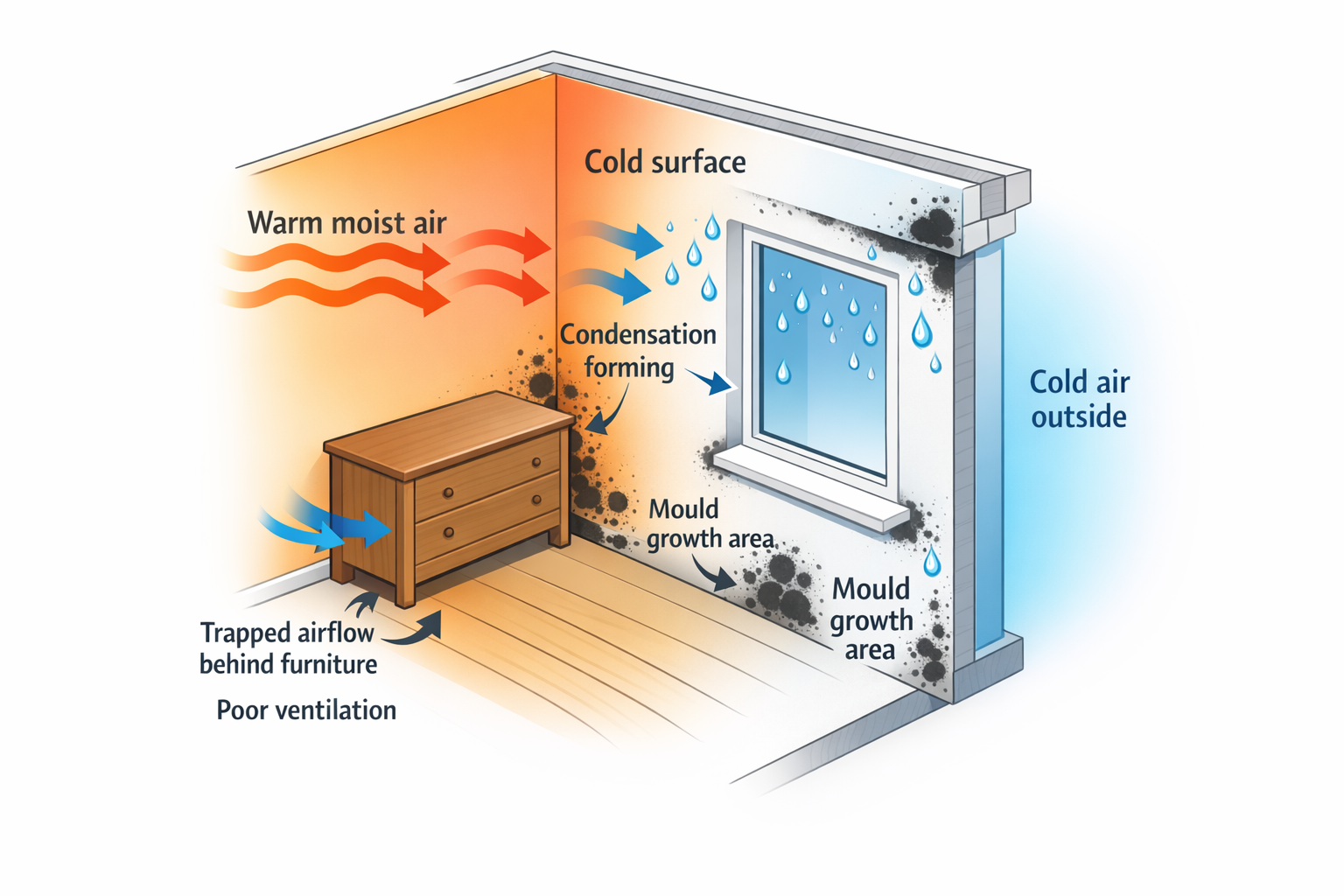
Everyday activities release moisture into indoor air. Cooking, showering and breathing add water vapour. Warm air can hold this moisture until it hits a cold surface, where it condenses into water. In many North West homes, modern upgrades trap heat but reduce airflow, so moisture builds up in certain spots. Mould grows where those surfaces stay damp long enough.
The correct approach
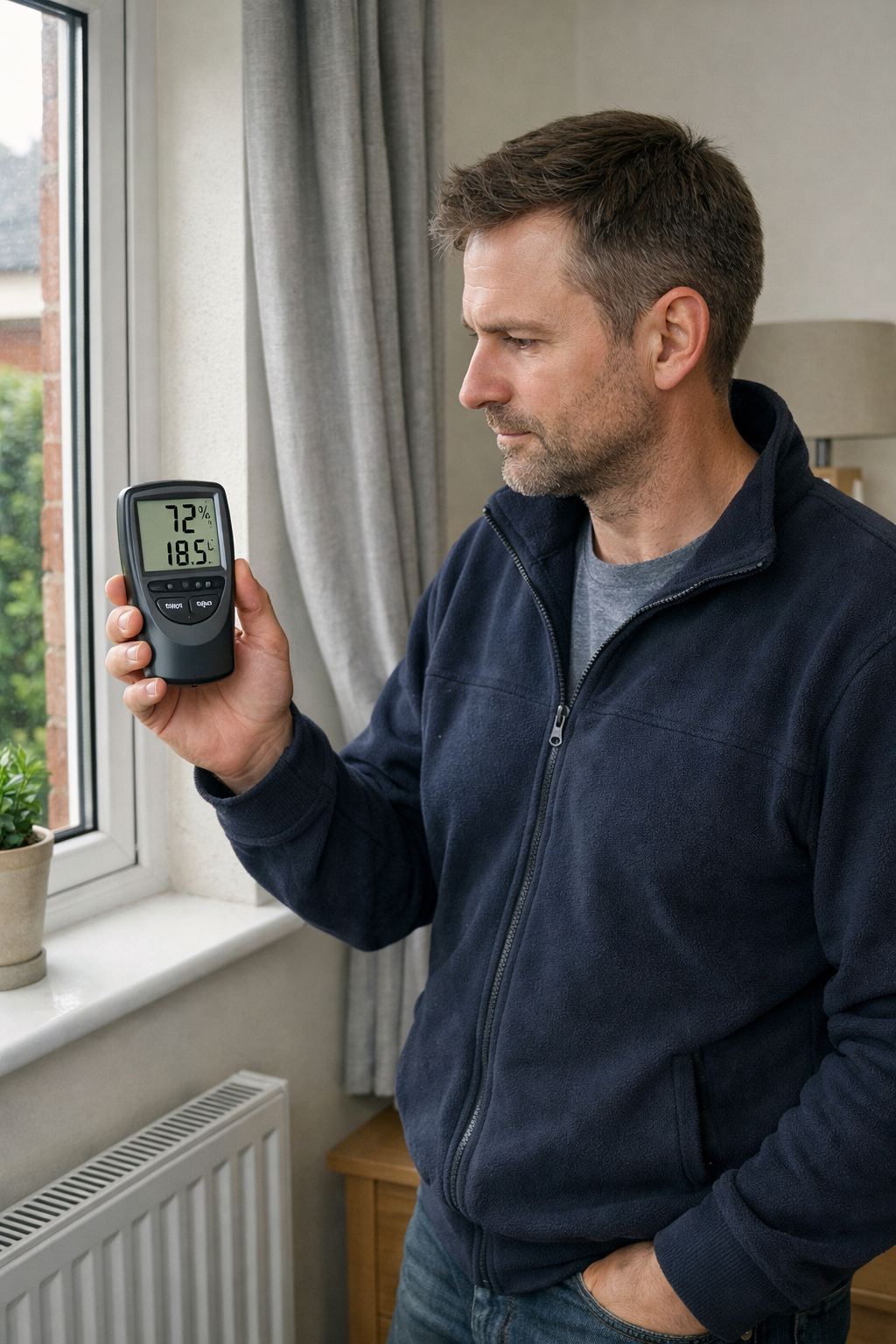
Identify Moisture Movement
We locate where humid air is concentrating inside the property.

Improve controlled airflow
Moisture needs a safe path to leave the building.
Prevent regrowth
Once surfaces remain dry, mould cannot develop again.
Stabilise surface temperatures
Prevent surfaces from reaching the condensation point.
Properites We Regularly Treat
Victorian Terraces
1930s semi-detached homes
Solid wall properties
Rental & renovation properties
Extensions built without
original DPC alignment
Common across Manchester, Liverpool, Warrington,
Wigan, Bolton and surrounding North West areas.

Book a
Moisture Survey
WaltBray Damp & Moisture Specialists
| North West England
If mould keeps returning,
the cause has not yet been identified.
We explain why it forms and what will stop it.
Your Questions, Answered
-
Cleaning removes the growth but not the moisture that allows it. When the surface becomes damp again, mould returns.
-
Usually not. Most mould problems are condensation rather than rising damp. A survey confirms the difference.
-
Cold surfaces reach condensation temperature more easily while indoor humidity stays high.
-
Temporary ventilation can help but does not solve the underlying imbalance inside the building.
-
Prolonged exposure to mould can affect indoor air quality and may impact health, especially in bedrooms where people spend long periods of time.
Common effects can include irritated eyes and throat, coughing, headaches and worsening asthma or allergy symptoms. Some people also notice poor sleep or persistent congestion in affected rooms.